 Luxusmarken in China






10.11.2026
A New Schaeffler: A Future Full of Promise!
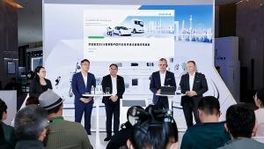
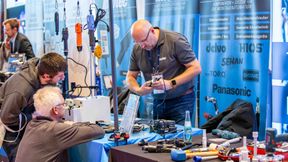
As a motion technology company, Schaeffler has long used the Schaeffler Automotive Symposium as its grandest platform for showcasing the full breadth of its technological capabilities. In Suzhou in 2026, more than 30 technical presentations, over 500 product exhibits, and more than 10 test-drive vehicles brought together over 800 customers for an immersive experience of technological innovation.
This time, however, Schaeffler brought much more than a product refresh that comes once every four years. It presented a completely transformed Schaeffler, reshaped through two years of organizational integration and technological convergence.
For many years, the outside world has primarily associated Schaeffler with precision mechanical components such as bearings, engines, transmissions, and clutches. This time, however, the spotlight was on all-in-one electric drive systems, steer-by-wire actuators, zone control units, and software-defined vehicle (SDV) architectures.
From precision mechanics to mechatronics, and from industrial and automotive components to broader fields such as humanoid robotics, Schaeffler is redefining its identity at a pace that exceeds market expectations.
Showcasing the Strength of Mechatronics
After attending several engaging technical presentations and exploring the ten technology-themed exhibition zones, particularly the four key automotive technology clusters, visitors could clearly see what makes this new Schaeffler different: its approach to presenting innovation through integrated, system-level solutions.
In the Powertrain cluster, highly integrated solutions such as the high-voltage coaxial multi-in-one electric drive system, the 2.5-in-1 electric drive system, and the P1+P3 dedicated hybrid transmission demonstrated how mechanical structures, power electronics, and control software work together at the system level. Traditionally, Schaeffler excelled in precision mechanics, while Vitesco Technologies brought strengths in intelligent electronics, with each operating in its respective domain. Today, the two have been brought together within a unified development system, creating comprehensive vertical integration capabilities spanning individual components to complete system solutions.
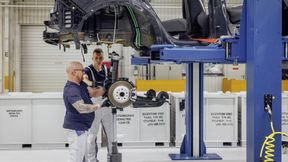
The Chassis & Body cluster takes mechatronics to the actuation level. Steer-by-wire actuators and power units achieve Functional Safety Level D. The electromechanical brake (EMB) system controls braking force through electromechanical actuators, representing an important direction in the evolution of braking systems toward brake-by-wire technology.
The Vehicle Control cluster addresses a central challenge of software-defined vehicles (SDVs). Highlights include a 48V low-voltage electrical network, vehicle-wide electrical and electronic (E/E) architecture, and an SDV architecture featuring zone control units (ZCUs) and a high-performance computer (HPC). These solutions enable functions traditionally distributed across individual control units to be consolidated at higher levels and flexibly deployed, reducing the number of control units and shortening development cycles.
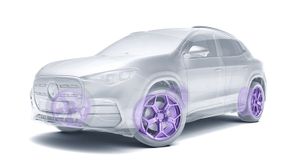
The Energy Management cluster extends this systems-oriented approach to every stage of the vehicle's energy flow. The integrated thermal management system connects coolant and refrigerant circuits while integrating more than 20 supporting components. The Energy Hub, jointly developed with CATL, is centered around a high-voltage battery pack and integrates functions including a high-voltage DC-DC boost module, a high-voltage power distribution unit, a battery management unit (BMU), and an on-board charger (OBC).
The transformation from a traditional automotive component supplier into a motion technology company capable of deeply integrating mechanics and electronics, as well as hardware and software, undoubtedly represents a fundamental and comprehensive leap forward in Schaeffler's core competitiveness.
What this symposium showcased was not merely Schaeffler's technological strength today, but also a future industrial landscape that is already taking shape.
While its traditional industrial business continues to provide a solid foundation, its automotive components business has successfully entered the fast lane of electrification and intelligent mobility. At the same time, Schaeffler is accelerating its expansion into high-growth emerging fields. In the "Beyond Automotive" exhibition area, embodied intelligence and the low-altitude economy took center stage. In humanoid robotics, Schaeffler is focusing on the development and production of key subsystems and core components, scenario-based training and data services, as well as industrial applications. In the low-altitude economy, high-performance technologies for electric vertical take-off and landing (eVTOL) and electric conventional take-off and landing (eCTOL) aircraft are already advancing toward industrial application, supporting the electrification of aviation.
Dr. Zhang Yilin, CEO of Schaeffler Greater China, said: "China is one of the most important strategic markets for Schaeffler globally and a key market for shaping the future of motion. Building on our extensive expertise in motion technologies, we will continue to expand into emerging fields, push the boundaries of future development, and create greater value for the Chinese market and industrial transformation."
From the establishment of a hydrogen technology company to the launch of a humanoid robotics factory, Schaeffler is leveraging decades of accumulated engineering expertise, manufacturing capabilities, and vertical integration to cultivate new growth drivers for the next stage of its journey.
Leadership Transition: A Cherished Legacy and a New Journey
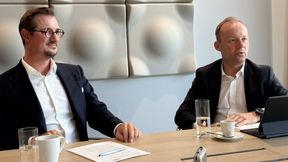
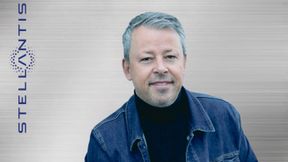
At this year's symposium, George F. W. Schaeffler, family shareholder and Chairman of the Supervisory Board of Schaeffler Group, attended in person to witness a CEO transition ceremony for Schaeffler China. Dr. Zhang Yilin marked his retirement, while Dr. Chen Xiangbin is set to succeed him as CEO of Schaeffler Greater China. During the subsequent media briefing, a conversation between the two executives and a reporter from AI Automotive Manufacturing offered insights into what is changing and what remains unchanged during this leadership transition.
When asked what cherished legacy Schaeffler China has steadfastly upheld over the years, regardless of how much the company may change, Dr. Zhang Yilin gave a straightforward yet resolute answer: "I believe the most important thing about Schaeffler in China is its deeply ingrained entrepreneurial spirit of taking ownership. We have always focused on customer needs, genuinely understood their pain points, helped them solve problems, progressed and grown together, and taken responsibility for the results." In this reporter's view, the entrepreneurial spirit Dr. Zhang described has been a driving force behind Schaeffler China's development over the past three decades: from a single plant in Taicang to 15 plants today, from just a few dozen employees to nearly 20,000, and from a standing start to annual revenue of nearly €5 billion.
Dr. Chen Xiangbin, who is taking over the reins, has actually spent 20 years at Schaeffler. His career began as a test engineer at the company's headquarters in Germany, before progressing through transmission systems, engine systems, the Automotive Technologies division, and ultimately the E-Mobility business. He is a well-rounded executive with a strong understanding of both technology and the market. "I have worked alongside Dr. Zhang Yilin for 20 years, so many of our philosophies and ideas are closely aligned and share the same foundations." This opening statement immediately offered reassurance to the industry.
Looking ahead, he summarized Schaeffler China's development strategy in three key priorities: "First, we will remain firmly committed to Schaeffler's deeply ingrained customer-centric philosophy, genuinely put ourselves in our customers' shoes, help them solve problems, and achieve win-win outcomes. Second, we will continue to step up innovation, address development challenges through innovation, support the growth of the Chinese market through sustained investment in innovation, and further strengthen our team. Third, we will leverage the local ecosystem to improve efficiency and organizational capabilities, foster the entrepreneurial spirit, and turn ideas into tangible results."
Dr. Zhang Yilin leaves behind an organizational ethos built around the entrepreneurial spirit and a business with annual revenue of nearly €5 billion. Dr. Chen Xiangbin inherits an organization with strong independent capabilities, an innovation system capable of continuous evolution, and an industrial landscape already oriented toward the future.
Expanding the Boundaries of Motion Technology
From an industry-wide perspective, Schaeffler's transformation carries much deeper significance. Competition in the automotive industry has shifted from a focus on the performance and price of individual components to a comprehensive contest involving systems integration, hardware-software collaboration, and even ecosystem development. A global mechanical engineering giant has rapidly strengthened its electronics and software capabilities through mergers and integration, completed a major leap from precision mechanics to mechatronics in just two years, and established an early foothold in frontier fields such as hydrogen energy, humanoid robotics, and the low-altitude economy. This transformation alone offers a compelling case study for the industry.
As the theme of this symposium, "Beyond Driving," suggests, Schaeffler's automotive technologies are no longer confined to powertrain systems, nor are they limited to road transportation itself. The boundaries of motion technology are continuously expanding, driven by changes in people and organizations, as well as the broadening strategic vision of the company...
A new Schaeffler, with a future full of promise!